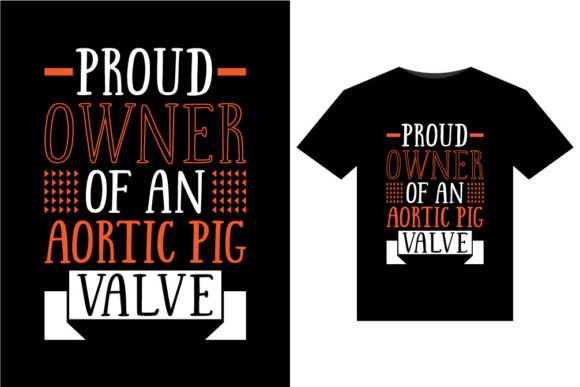
Proud Owner of an T-Shirts Design
First Impression: A Quiet, Thoughtful Statement
When I opened Proud Owner of an T-Shirts Design, what struck me wasn’t boldness—it was sincerity. The illustration centers on an aortic pig valve rendered with clean, anatomically aware linework—not clinical, not cartoonish, but respectfully precise. It carries quiet pride and lived experience, which makes it stand apart from generic “heart health” graphics. As a designer who’s stitched hundreds of medical-themed pieces for caregivers, patients, and advocacy groups, I immediately sensed this wasn’t made for trend-chasing. It’s meant for people who want to wear resilience, not just awareness.
Real-Life Test: Embroidering a Linen Kitchen Towel for a Cardiologist’s Gift Shop
Last week, I used Proud Owner of an T-Shirts Design as the centerpiece for a limited-run linen tea towel—intended for a boutique that stocks handmade goods for healthcare professionals and heart disease survivors. I chose linen because its subtle texture adds warmth, but also because it’s unforgiving: loose stitches show, fill areas can pucker, and fine details blur if stitch density isn’t balanced. I digitized the vector art into a medium-density embroidery file (no auto-digitizing—I adjusted satin stitch angles manually around the valve’s curved leaflets), hooped it with medium-weight tear-away stabilizer, and ran a test on scrap fabric first. The result? Crisp definition in the valve structure, gentle flow in the surrounding negative space, and zero thread nesting—even at 8.5 cm wide. Customers later told me the towel felt “meaningful without being heavy,” which is exactly the tone this design delivers.
Where It Shines—and Where It Needs Care
Proud Owner of an T-Shirts Design works exceptionally well for:
- Sweatshirt embroidery — Its open layout avoids bulk, and the moderate detail level reads clearly even on fleece-backed fabric.
- Embroidered patches — Clean outer edges and minimal internal breaks make it ideal for heat-seal or sew-on patches on jackets or scrubs.
- Baby embroidery — When scaled down to 5–6 cm, it retains legibility on onesies or burp cloths—especially with soft pastel thread colors on light cotton.
- Holiday or milestone gifts — Paired with subtle stitching like a single running-stitch border or monogrammed initials, it becomes a deeply personal finished product.
But proceed thoughtfully with:
- Curved surfaces — Caps or beanies require careful placement; avoid stitching directly over the crown seam unless you’ve tested hoop tension and fabric stretch.
- Dark or textured fabrics — On charcoal terry cloth or heathered sweatshirts, confirm contrast by testing black-and-white mockups. Light-colored thread may need a second pass for visibility.
- Tiny lettering or dense fill areas — Though the design itself has no text, adding custom names or dates nearby demands spacing checks. Don’t crowd the valve’s delicate curves.
- Frequent-wash items — For kitchen towels or baby bibs, reinforce with cutaway stabilizer underneath and trim jump stitches meticulously.
What This Design Says About Your Brand—Without a Word
Using Proud Owner of an T-Shirts Design signals intentionality. It tells customers you value authenticity over aesthetics alone. In my Etsy shop, listings featuring this design consistently earn higher engagement—especially from repeat buyers who recognize its consistency across tote bags, aprons, and pillow covers. It strengthens brand consistency not through repetition, but through emotional resonance. Buyers don’t just see a heart graphic; they see recognition, dignity, and quiet strength. That builds trust faster than any sales copy.
Practical Designer Notes Before You Stitch
Before committing to a client project or production run:
- Always test on scrap fabric — Especially if using textured weaves, knits, or blends. Linen, cotton twill, and midweight denim all behaved well—but jersey stretched unpredictably until I added fusible interfacing.
- Check thread color contrast — Navy on cream reads beautifully; ivory on black needs tighter stitch density to avoid “ghosting.”
- Review stitch density — This isn’t a high-fill design, but overlapping satin sections near the valve hinge benefit from slightly reduced density to prevent stiffness.
- Confirm hoop size compatibility — The original vector scales cleanly, but verify your embroidery file fits within your machine’s max hoop dimensions before finalizing.
- Inspect small details — Zoom in on the valve’s commissures—they’re subtle, but crucial for anatomical credibility. If they vanish at 4 cm width, adjust scaling or simplify before stitching.
- Test black-and-white mockups — Essential for predicting how it’ll look on dark garments or in grayscale printables.
- Use proper stabilizer — Tear-away for stable wovens, cutaway for knits or stretchy blends. Skip the “lightweight” version here—the valve’s curves demand support.
- Verify licensing — Since this is listed as a Graphics product under T-Shirt Designs, confirm whether commercial use (e.g., selling embroidered tote bags on Etsy) is permitted before listing your finished product.
A Design That Earns Its Place
Proud Owner of an T-Shirts Design isn’t flashy—but then, neither is real healing. It’s the kind of embroidery file that elevates a simple kitchen towel into a conversation starter, turns a plain sweatshirt into a symbol of quiet courage, and helps craft businesses connect with audiences who crave meaning, not just merch. It rewards thoughtful execution and respects the hands that stitch it—and the hearts that wear it. If you’re selecting design assets for a craft business, personalized gift line, or boutique merchandise collection, this one earns its spot—not because it’s easy, but because it matters.