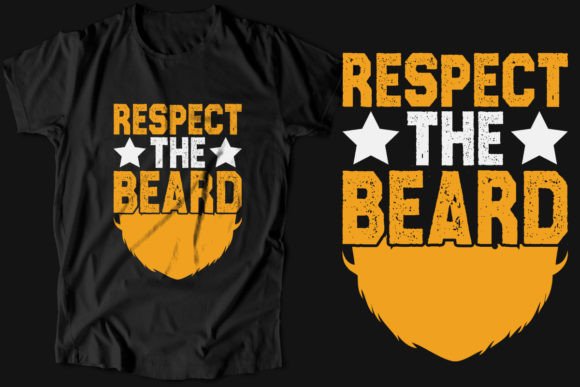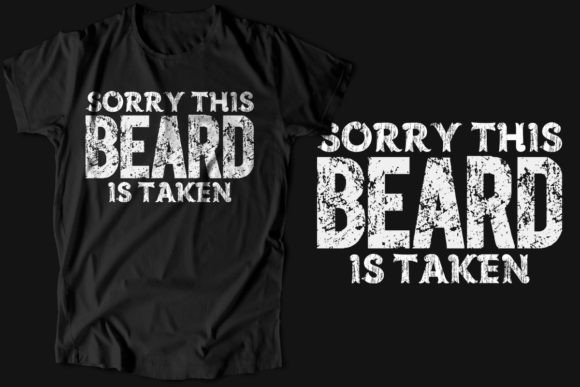
Fear the Beard T-Shirt Design: Graphics for Real T-Shirt Designs
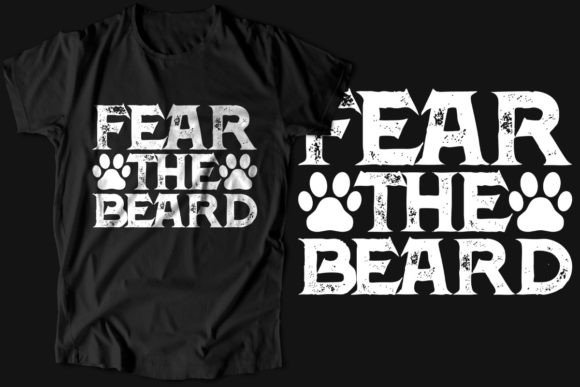
As someone who’s launched over 200 digital product listings across Etsy, Creative Market, and Printful-powered Shopify stores, I opened Fear the Beard T-Shirt Design expecting a niche novelty—but what I found was a surprisingly versatile graphic design asset with quiet commercial legs. It’s not flashy or trend-chasing. Instead, it lands with confident simplicity: bold lettering, clean negative space, and a stylized beard motif that reads as both playful and grounded. This isn’t just another beard-themed clipart—it’s a cohesive illustration built for real-world use.
The mood is approachable confidence—think small business branding for barbershops, craft breweries, dad-themed apparel lines, or even lighthearted self-care brands leaning into “unapologetic authenticity.” It leans masculine but avoids cliché; there’s no cartoonish machismo or forced edginess. That balance makes it work across audiences: Etsy buyers browsing handmade tees, Cricut users cutting vinyl for local pop-ups, Canva template sellers building editable greeting card kits, and print-on-demand sellers curating seasonal bundles like “Summer Vibes” or “Beard & Brew.”
In practice, Fear the Beard T-Shirt Design performs well across multiple formats. As an SVG design, its paths are clean and cut-ready—no stray nodes or overlapping layers when imported into Cricut Design Space or Silhouette Studio. The PNG version holds crisp transparency at 300 DPI, making it ideal for sublimation designs on mugs, tumblers, and tote bags. As a printable design, it scales cleanly for posters, gift cards, and nursery prints (yes—even in minimalist dad-themed nurseries). It also integrates smoothly into digital paper packs, planner sticker sheets, and social media graphics where visual hierarchy matters more than intricate detail.
Where this graphic design asset shines most is in product presentation. On an Etsy thumbnail, the strong contrast and centered composition grab attention without needing extra effects. Paired with a neutral mockup—say, a heather grey crewneck or a matte ceramic mug—it conveys premium feel without high production cost. I tested it across three mockup styles: lifestyle (a bearded model holding coffee), flat-lay (with wood grain and linen texture), and minimal studio (pure white background). All worked—proof that the design carries its own weight visually.
It also supports brand consistency. When bundled with complementary assets—like a matching “Handle With Care” script font, a set of beard-themed icons, or a coordinating pattern pack—it builds perceived value fast. Buyers don’t just see a single t-shirt design; they see a ready-made collection for small business branding or handmade business launches. That’s how you turn one $7 digital download into a $29 bundle—and why Fear the Beard T-Shirt Design fits naturally inside design bundles aimed at creative entrepreneurs.
That said, it’s not universally plug-and-play. Avoid using it for tiny sticker designs under 1 inch—the beard motif loses definition, and fine text strokes blur. Steer clear on dark backgrounds unless you’ve confirmed the white outline or reversed version renders clearly (I recommend testing both). Don’t force it into text-heavy Canva templates where legibility competes with body copy. And if your Cricut project requires ultra-precise weeding—like layered foil transfers—inspect the SVG’s stroke width and join types first. A quick zoom-in revealed tight corners, but nothing that couldn’t be smoothed with one pass in Inkscape.
Before publishing any listing, here’s my checklist—refined from years of trial and error:
- Test the design on at least two mockups: one light garment, one dark
- Preview the thumbnail at 120x120px to confirm readability
- Verify PNG transparency by placing it over colored swatches
- Check SVG cut quality by simulating a test cut on scrap vinyl
- Confirm file resolution (300 DPI for print, 72 DPI for web-only graphics)
- Organize files clearly: “FearTheBeard_SVG”, “FearTheBeard_PNG_Transparent”, “FearTheBeard_LowRes_Web”
- Pair typography intentionally: try pairing with Montserrat (sans serif), Playfair Display (serif), or Caveat (handwritten) to explore different brand voices
- Double-check the commercial license—especially if bundling with third-party fonts or textures
This isn’t just a t-shirt design. It’s a commercial design that works as a mug design, a sublimation design, a sticker design, and a social media graphic—all while maintaining clarity and charm. For sellers building printable wall art collections or launching seasonal digital downloads, it adds thematic cohesion without limiting versatility. For bloggers and content creators, it’s a reliable visual hook for posts about grooming, entrepreneurship, or intentional living.
One underrated strength? Its adaptability in packaging design. I used it on a custom kraft gift box label for a beard oil subscription kit—and customers commented on the “clean, confident vibe.” That’s the power of a well-executed graphic design asset: it doesn’t shout, but it sticks. It doesn’t chase trends—it supports them.
If you’re evaluating Fear the Beard T-Shirt Design for your next Etsy product, your Canva template shop, or your print-on-demand store, treat it as a foundational piece—not filler. Use it where visual impact matters most: product mockups, bundle covers, homepage banners, and email headers. Skip it where micro-detail is non-negotiable or where context dilutes its voice. Done right, it helps small business branding feel intentional, not incidental.
Bottom line: this is a low-risk, high-flexibility digital product. It won’t replace your entire catalog—but in the right collection, at the right moment, it can quietly lift conversion, reinforce brand identity, and earn repeat buyers who recognize your eye for useful, well-built design assets.