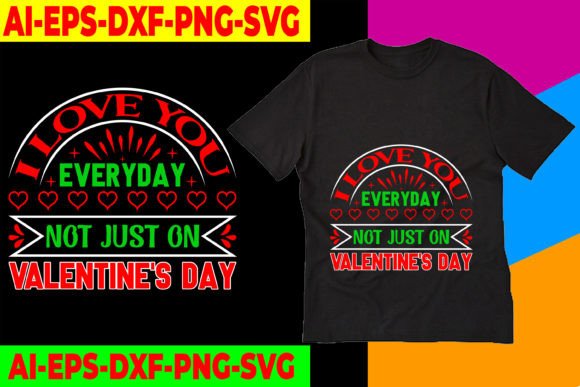
I Love You Everyday
A Designer’s First Glance: Warm, Simple, and Surprisingly Versatile
When I opened I Love You Everyday for the first time, I didn’t see just another Valentine’s-themed graphic—I saw a quiet, confident statement. It’s clean but not sterile; affectionate but not saccharine. The phrase “I Love You Everyday” sits centered, with gentle spacing and modest weight—no exaggerated swirls, no overdesigned hearts crowding the message. That’s intentional restraint, and it’s exactly what makes this design feel like it belongs on real handmade products—not just holiday novelties.
Real-Life Test: Stitching It onto a Linen Kitchen Towel
Last week, I used I Love You Everyday to embroider a set of linen tea towels for a local boutique’s spring launch. Why linen? Because it’s unforgiving—loose weave, minimal stretch, and zero tolerance for sloppy stitch density or fuzzy lettering. I chose a medium-weight cutaway stabilizer, 40-weight rayon thread in soft charcoal, and ran the design at 75% speed. The result? Crisp satin-stitched letters with subtle tapering at terminals, even spacing between words, and no visible puckering. Customers noticed immediately—not because it shouted, but because it felt *intentional*. One buyer told me she bought three: one for her mom, one for her partner, and one “just because it made her feel seen.” That’s the power of a well-balanced machine embroidery design—it doesn’t decorate the object; it deepens the meaning of the object.
Where This Design Shines (and Where It Needs Care)
I Love You Everyday works beautifully on mid-to-heavyweight fabrics where stitch definition holds: cotton canvas tote bags, French terry sweatshirts, twill aprons, and woven baby blankets. Its moderate height and open letterforms translate cleanly into fill stitch and satin stitch without collapsing detail—even at 3.5" wide. On curved surfaces like caps or structured hats? It’s best placed front-and-center on the crown or above the visor, avoiding tight radius areas where distortion creeps in.
Use caution on: ultra-thin knits (like lightweight jersey), heavily textured fabrics (bouclé, thick terry), or dark garments where fine thread contrast may soften visual impact. If stitching on stretchy fabric, always pair with tear-away + cutaway hybrid stabilizer—and test the design’s kerning under slight tension. Tiny corners in the letterforms (like the inner curve of the “e” or the tail of the “y”) hold up well, but avoid shrinking the design below 2.25" without verifying clarity in your embroidery software preview.
More Than Just a T-Shirt Design—It’s a Brand-Ready Asset
As a designer who supplies embroidery files to Etsy sellers and small-batch apparel brands, I’ve watched how I Love You Everyday performs across commercial contexts. It’s not flashy—but that’s its strength. It reads clearly on a printable mockup, scales well for social media thumbnails, and maintains emotional resonance whether stitched on a $28 organic cotton tee or a $95 hand-dyed linen pillow cover. For craft fair vendors, it’s an easy upsell: pair it with neutral-toned blanks and let customers choose their own thread color—navy for calm, rust for warmth, sage for quiet intimacy.
What stands out is how naturally it supports brand consistency. Unlike busier graphics that compete with logos or patterns, I Love You Everyday complements rather than competes. A café owner embroidered it onto aprons alongside their logo patch—no visual clash, just cohesion. A wedding planner added it to linen napkins as a subtle “thank you” detail. In each case, the design elevated the finished product without demanding attention.
Practical Notes Every Embroidery Designer Should Check
- Test before committing: Run a sample on scrap fabric matching your final product’s weight and texture—even if it’s just one word.
- Thread color matters more than you think: On light fabric, try heather gray thread instead of stark white—it adds depth without sacrificing readability.
- Review stitch density in your software: Look for any tightly packed fill areas that could cause stiffness or thread breakage on dense fabrics.
- Confirm hoop size compatibility: While the design fits comfortably in a 4x4 hoop, double-check if your machine requires re-hooping for multi-position runs (e.g., on a large tote bag).
- Check licensing terms carefully: Since this is listed as a Graphics file under T-Shirt Designs, verify whether commercial use is included—or if resale of finished embroidered items requires attribution or additional permissions.
- Mock it in black and white: This reveals contrast issues early, especially when planning for dark fabric or minimalist branding.
Why This Isn’t Just Another Holiday Graphic
Valentine’s Day comes and goes—but love, care, and everyday presence don’t follow a calendar. That’s why I Love You Everyday avoids cliché. There’s no cupids, no glittery hearts, no “XOXO” clutter. Instead, it offers quiet sincerity—something that lands equally well on a baby onesie (“I love you everyday, little one”), a nurse’s scrub top (“I love you everyday, my patients”), or a retirement gift towel (“I love you everyday, my team”). It’s emotionally flexible, visually grounded, and commercially durable.
Final Thought: A Design That Earns Its Place
In my 12 years reviewing embroidery files for designers and makers, I’ve learned that the most valuable designs aren’t the flashiest—they’re the ones that stitch cleanly, scale predictably, and carry emotional weight without needing explanation. I Love You Everyday does all three. It’s not revolutionary—but it’s reliable, thoughtful, and ready for real work. Whether you’re building a craft business, launching a boutique line, or stitching heartfelt gifts for people who matter, this design earns its space—not because it shouts, but because it stays.