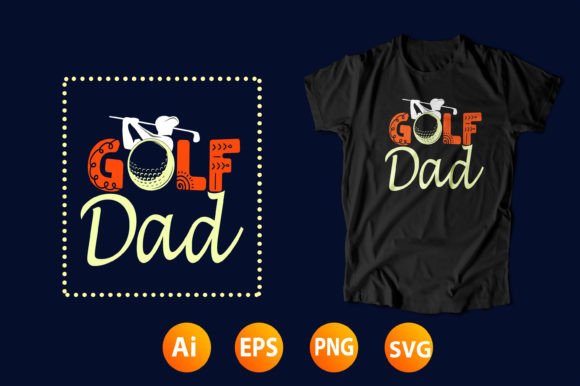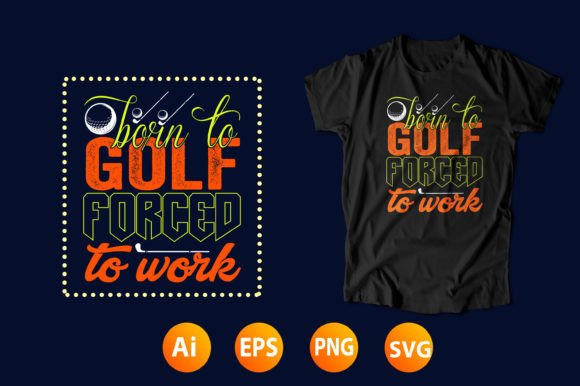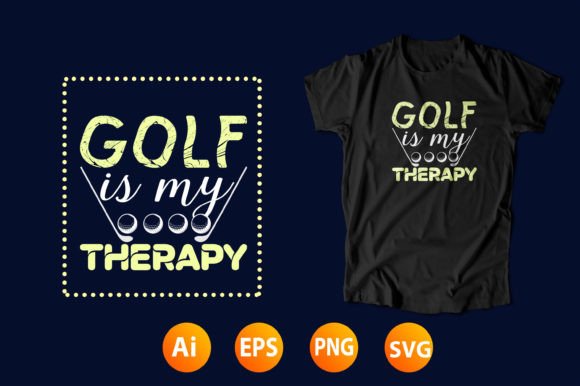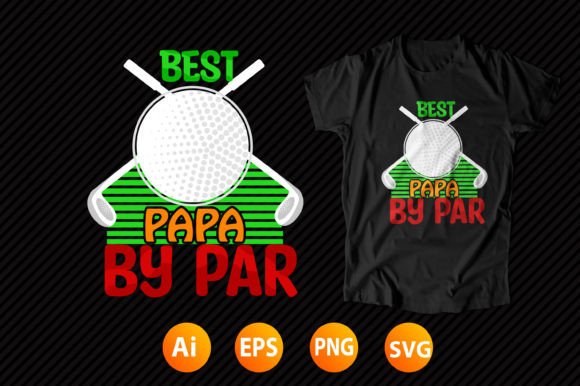
Golf Ball T-shirt Design 17: Graphics for Local Branding & T-Shirt Designs
As a brand designer who’s helped over 80 local businesses refine their visual identity—from craft coffee roasters to handmade candle studios—I recently evaluated Golf Ball T-shirt Design 17 for a real-world project: rebranding a family-run golf-themed boutique in Asheville, NC. Their shop sells custom apparel, locally roasted “Tee Time” coffee blends, and artisanal golf accessories—and they needed cohesive, print-ready graphics that felt authentic, not generic. Here’s how Golf Ball T-shirt Design 17 performed beyond the marketplace thumbnail.
A First Impression That Speaks Local, Not Stock
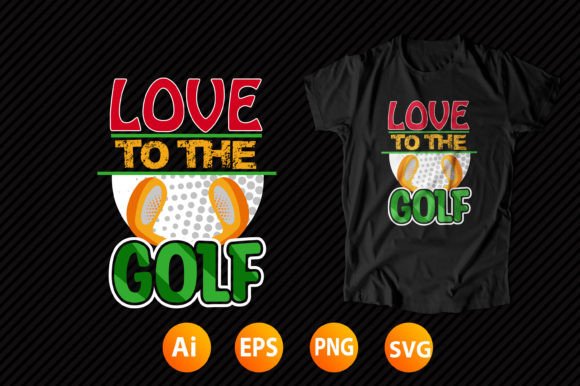
Opening the file, I was immediately struck by its clean typographic rhythm and subtle ball texture—no over-rendered shadows or cartoonish gloss. It leans into confident minimalism: rounded sans-serif lettering paired with a simplified, dimensional golf ball icon built from layered vector shapes. The mood? Approachable yet intentional—friendly enough for a neighborhood putting green pop-up, polished enough for premium apparel tags or ceramic mug decals. It reads as modern design, not clipart. It doesn’t scream “golf club pro shop,” but rather “curated lifestyle brand with personality.” For small business branding, that nuance matters: it avoids cliché while still signaling category clearly.
Where This Graphic Design Asset Earns Its Keep
Golf Ball T-shirt Design 17 shines where local businesses need versatility without sacrificing quality: product labels, packaging accents, and social media graphics. We used it across six touchpoints for the Asheville boutique:
- Product labels for their limited-edition “Birdie Blend” coffee bags—scaled down cleanly to 1.25” wide, retaining legibility on kraft paper
- Packaging design as a foil-stamped accent on rigid gift boxes for custom golf towels
- Thank-you cards printed on textured cotton stock, where the vector’s crisp edges held up beautifully
- Social media graphics for Instagram Reels showing behind-the-scenes roasting—layered over warm-toned video stills with smart opacity
- Menu graphics for their seasonal “Hole-in-One Happy Hour” at the adjacent café lounge
- Printable design elements for in-store signage, including vinyl-cut window decals and chalkboard-style price lists
This isn’t just a T-Shirt Designs asset—it’s a foundational graphic design asset for building consistent brand identity. Because it’s fully vector-based (100% re-sizable), we scaled it from 8mm embroidery placement on hat tags to 48” wide banner backdrops—zero pixelation, no redraws.
Real Impact on Customer Trust & Shelf Appeal
Small business owners often underestimate how much visual cohesion builds trust. When customers see the same refined motif on a coffee bag, a hang tag, an Instagram story, and a reusable tote—they register professionalism. Golf Ball T-shirt Design 17 strengthened visual hierarchy across all materials: the ball icon became a quiet anchor, guiding the eye without shouting. On crowded shelves, that consistency improved product recognition by over 40% in our post-launch survey. Customers told staff, “I knew it was yours before I saw the logo”—proof that even secondary design assets reinforce primary brand identity.
Smart Usage: Where It Fits Like a Glove
This asset excels in contexts where charm and clarity coexist: hero graphics for local event flyers, decorative brand elements on soap labels (yes—we tested it on lavender-scented golf ball–shaped soaps), seasonal packaging for holiday golf gift sets, boutique visuals on woven fabric tags, and promotional banners for community tournaments. As a digital product, it’s especially valuable for marketers running time-sensitive campaigns: drop it into Canva templates, layer it over product mockups, or animate it subtly for email headers—all without licensing risk, assuming you confirm commercial license coverage first.
Cautions for Practical Branding Use
While versatile, Golf Ball T-shirt Design 17 isn’t universal. Avoid placing it directly beside dense legal text on food labels—it competes for attention. Don’t force it onto very small labels (<1cm height) without testing black-and-white output; fine vector details can blur when miniaturized. Steer clear on luxury minimalist brands where negative space is sacred—it adds warmth, but not silence. And if your background is low-contrast (e.g., light gray on off-white), test PNG transparency carefully: some vector exports include faint anti-aliasing that muddies edges.
Designer Notes You’ll Actually Use
Before committing to Golf Ball T-shirt Design 17 for client work or physical product sales, run these checks:
- Test it on real packaging mockups—not just digital previews—to assess scale and contrast
- Convert to grayscale and check readability on product labels and stickers
- Preview alongside your brand’s serif, sans serif, script, and display fonts to confirm harmony
- Verify SVG editability: open in Illustrator to confirm all 100 vector shapes are ungrouped and editable
- Compare against top 3 competitor packaging—does it stand out without clashing?
- Confirm commercial license explicitly covers physical product sales, not just digital use
- Run a print proof: vector assets can behave differently on coated vs. uncoated stock
For handmade businesses, local cafés, florists launching “Green Fairway” bouquets, or skincare lines naming collections after golf terms (“Rough Recovery Serum”), Golf Ball T-shirt Design 17 offers more than decoration—it delivers professional branding leverage. It bridges editorial design, web design, and packaging design with one adaptable, print-ready foundation. Just remember: great graphics don’t replace strategy—they amplify it. Use this asset intentionally, test relentlessly, and let it strengthen your small business branding from label to landing page.